
I’ve been riding the freelance roller coaster since 2011. I eased my way into this wild ride by first working a corporate job that demanded immense travel, which meant working from airports, hotels, and—sometimes—home. I then took a job as art director for a real estate content company that allowed me to work remotely full-time. Finally, I moved to a small, remote Hawaiian Island and took the full freelance plunge. I’ve recently moved back to the mainland and I’m working from home as an editing and writing (and occasional design) freelancer in Louisville, KY.
It has not been easy, but it has been a rewarding journey and I have learned so much about myself and about how to be a freelancer. The skills required to be a successful freelancer don’t usually pop up when you’re fantasizing about finally standing up to that awful boss, shouting “See ya later, suckers!” and proudly striding through the cubicle maze to freedom. I hate to ruin the dream, but if you really want to become a full-time freelancer, you need to put in the work.
With that in mind, I offer you the big lessons I’ve learned over the past four years as an independent contractor:
Keep your day job. I know this is not what you want to hear, but in order to support yourself as a freelancer you will need multiple clients. When you are freelance, work tends to be feast or famine. For example, just this past January I went from no work at all to three projects happening at exactly the same time for three different clients and with three different skill sets. You’ll need to manage your schedule and your money to survive the lean times. It has taken me four years to build a reliable stable of clients: some offer frequent work, some I hear from quarterly, and many (especially friend-of-friend referrals for things such as wedding invitations) are one-time deals. I heartily recommend you start building your client and referral network before you leave a reliable paycheck and health insurance.
It may rain Benjamins, but it won’t rain bennies. Harsh reality but true, my freelancing friends. (And, really, it rarely rains Benjamins, either.) You will need to organize your own:
- Health benefits: Good news there as this got a whole lot more affordable thanks to the Affordable Care Act. Thanks, Obama! (Seriously, pre-ACA, did you ever look at the premiums for COBRA self-insurance? Just take my first-born child, please! Who could afford that?)
- Retirement savings: You’ll need to investigate and invest in your own 401(k), IRA, or other savings plan. You’ll also probably want to start saving money more in general to address that whole feast/famine freelance thing.
- New tax obligations: You will owe Uncle Sam more money without an employer offsetting and managing your tax contributions—it’s called self-employment tax and it totally blows. I set aside between 35 and 45 percent of my income to pay taxes. Usually, I make quarterly payments in advance. Talk to an accountant, who will become your best friend and commiserate with you about how poorly 1099 workers are treated in the tax world, regardless of actual income.
- Vacation: OK, so this is actually the good news! As your own boss, you get to decide when to work and when to sneak away for a week with your girlfriends to sip bourbon on the beach. Two weeks of vacation a year? I don’t think so! More like two months! The tough part: Making enough money to afford to go on vacation. I rarely turn down work because of that whole feast/famine issue. My time off usually just means I get to spend more time painting, reading or exploring my city. It takes a special planetary alignment to have money and time off at the same time in this line of work, but it does happen and as I’ve stuck with the freelance path, it has gotten easier and more financially rewarding.
Networking will be your life. Saddle up, Sally – get ready to schmooze your way through cocktail parties, conferences, online groups and old Facebook friends. To build clients, you must promote yourself and charm people—offline and online. Just remember, I said, “charm,” not strong-arm or bore-to-death people you know tangentially. Your ability to engage potential clients is crucial. I belong to multiple writing and editing societies, forums, and groups. I pay dues, I wade through emails full of tips in search of ideas to apply to my own business, and I’m always looking for new clients via organizations, websites, and more. It’s part of the job when you are a freelancer: You need to build social networking and self-promotion into your workweek.

You’re the IT Guy. You want to be a writer (or editor or other) on your own terms. You want freedom from a patriarchal, dismissive corporate culture that feels toxic, unfair, and unappreciative. Maybe you just want the freedom to wear flip-flops every day. I don’t judge. But know this: You will be getting a crash course in repairing modems, Wi-Fi routers, laptops, keyboards, VPN issues, monitors, printers, Word crashes, and more. You will spend a lot of time Googling technical issues and using the Internet as your IT bible. And you will do it on deadline. And you will curse the technology gods. And you will run out and buy new and expensive office equipment at 8:45 p.m. on a Tuesday because you are the only person responsible for making sure your work is done and delivered. Personally, I love technology and I am drawn to writing and editing work that involves IT and networking and computer science—but you have to drop the whole “I can’t do that!” attitude and embrace your inner AV nerd. “JFGI” will become your mantra—and I recommend you Google that.
You need a website. As mentioned above, I’m comfortable with technology, so I built my own website. With the wide array of cheap, user-friendly website-building tools available online these days, you have no excuse for NOT having a website. My site serves several purposes: I sometimes use it to blog about things related to writing and editing, and I try to keep it light and playful, but still educational and professional. I never write about anything personal since this is my work website, not my “OMG! I LOVE BOURBON” website. I use it as a calling card, giving potential clients the URL. I use it to connect my multiple social network accounts (just the professional ones) and I use it to promote myself, sharing details about my resume, positive feedback from previous clients, and more.

Pick a Platform. Really, you’ll probably need most of them, from Twitter to Facebook, LinkedIn, and even those wacky Google+ Circles. You need to build a professional online version of yourself across multiple social networks. It’s a great way to find clients, referrals, and job sites, and to connect with other freelancers. It’s also—in 2015—an absolute requirement. You are e-schmoozing.
Time management. This is so important. I mean, it’s an art, a science, a religion, and the reason there are so many books, apps, and articles out there to help you manage your time. As a freelancer, nobody is checking your hours; nobody is guiding your schedule or verifying your progress on a project. It’s just you. I started in newspapers, so I have a deadline-oriented mentality; my biggest challenge was figuring out how to translate daily deadlines to monthly projects. It was a bit tricky at first and I put in a lot of late nights to make sure I met long-term deadlines in the first year. These days, though? I’m a master. I plot out my projects using online calendars and project-length to-do lists, breaking the work down into daily goals and weekly deliveries. I have my weekends off after three years of manic, panicked last-minute pushes thanks to taking time management seriously. It’s partly about putting in the organizational work and partly about realizing that you must separate your freelance work life from your personal life or risk your sanity. Defining work time and you time is a big challenge when freelancing. Most freelancers work from home, so delineating personal and work spaces is important. I have a home office upstairs and I find that physically walking upstairs to go to work helps focus my mind, while walking down those stairs at the end of the day helps me relax. You set your hours; the hard part is sticking to them. Only in the last six months have I finally committed to ignoring emails between 8 p.m. and 9 a.m.
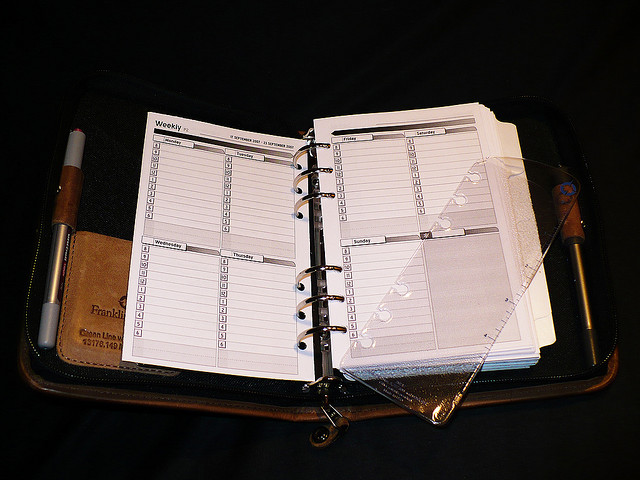
Get organized. Speaking of organizing your time, there is so much more you’ll need to be on top of as a freelancer. When I first started, mainly as an editor, I already had experience working remotely so I was familiar with Google Drive, Dropbox, Basecamp and other software that can help you track documents, projects, and versioning. On top of being very smart about how you organize project files on your computer (think about versioning, easy access, and a system that will help you locate a specific answer to a question that pops up three weeks after you finished the project), you need to track your income for tax purposes, your upcoming work schedule, your home office costs, your actual working hours for various projects and clients, your data usage, your communications, your invoices, your account passwords, etc. I record my income, outstanding invoices, and my hours using spreadsheets. I use a combination of paper and electronic files to organize my work and correspondence, though I have been moving towards electronic more in the last year. Since it’s just you at your business, you have to be ready to account for your work, your communications, and your history with dozens of different clients. And you have to consider legal and NDA (non-disclosure agreements) issues when talking to anybody about your work. My general rule: I don’t name names, ever.
Be professional. It’s all riding on you. Your work, and your behavior, represents your business and affects whether a client will want to work with you again. Being sure to communicate clearly and regularly via email/Skype/phone is important. I prefer a playful and collaborative tone in my freelance communications, but I never use humor in written comms until after I’ve spent some time on the phone, in person, or in video chats with clients. Once they know my personality, my humor—always professional, never self-deprecating, complaining or distasteful—can be a great tool for connecting with clients, especially if we’re both under deadline. My ability to work quickly and efficiently under pressure, to meet deadlines, to produce clean copy, to voluntarily take the extra steps to the best job I am capable of… all of this is facilitated by my sense of humor. Except when it isn’t! I have worked with many people who do not see a place or a need for levity in work. I don’t understand these people, but I make every effort to conform to their tone. As a freelancer, while you may feel like you are boss-free, in reality, every client is your boss. You are always working to make their jobs easier, to provide great work, and to help them improve processes and workflows on their end. Professionalism must be reflected in everything you do, from your personal appearance in video chats to your business website and your phone voicemail message.
Get dressed. Oh, sure, in my early years of remote work and freelancing, I spent many a week un-showered, letting my teeth gather fur as I typed away in yoga pants and t-shirts. Please learn from my mistakes. If you are going to freelance, you must get dressed every day that you are working. Much like having a separate workspace, putting on “real” clothing helps you get into work mode and actually get things accomplished. A woman in her PJs at 4 p.m. on a Wednesday is a woman who is more likely to do the dishes or fold laundry. Whereas a woman who is dressed up, made up, and smiling with a sparkly, minty mouth of clean teeth is far more likely to actually be at her desk working on the project due Friday morning. You don’t have to shower every day (I love TRESemme’s Fresh Start Volumizing Dry Shampoo for sprucing up my un-showered hair up for an early-morning video call.), but you need to get out of your sleepwear and into daywear every day.
Know your value. This is especially meaningful for me, because when Javacia asked to interview me, I was somewhat dismissive and self-deprecating about my freelancing career, and putting myself down a bit. I realized after we talked that I was undervaluing the great lessons I’ve learned, the careful and conscientious—and just plain good!—work that I do. I genuinely care about every project I’m involved in and my big problem is taming my work ethic, not growing it. I’m still standing after all the hard lessons, lean times, and maddening deadlines. And more than that, I’m experienced and in demand as a writer and editor. I’m living the dream. But, aside from emotional value, I want to touch on your actual monetary value. It will depend on your field, your experience, and the specific work you are being asked to do. One thing I know many freelancers do at the start is undercharge. Do your research to find out what the going rate is for the work you’re being asked to do, and not just online but reach out to other freelancers and headhunters for input. Negotiate your fees if you want to—I will for charity or to support anything education-related—but don’t apologize for them. I can’t tell you how many friend-of-a-friend referrals I got for somebody’s aunt who “just wrote a book” and needed an editor. I would offer the reduced friend-rate, but old “aunt author” hadn’t done any research into what editing actually costs and after receiving my estimate would never contact me again! (Rude.) Know your audience, know your value, and know how much you can afford to charge. I have worked on projects, especially in the beginning, that wound up earning me $10 an hour. Remember, I’m paying almost half my income to the IRS so that meant I was really making about $6.50 an hour. Never again. It’s up to you to know how much money you need to make to break even. It’s also up to you to know when to walk away. After all, you’re the boss.
Danielle Hayden is a freelance writer and editor who transforms technology and business info into engaging, relatable content. Danielle, who has a background in both journalism and software, has been freelancing since 2011 and has worked on a wide array of topics and media, from computer networking course development to book editing to web site copywriting and editing and much more. Learn more about her work at http://dbhediting.com.
]]>

Many writers have dreams of hitting the literary big time, but would like to eat something other than Ramen Noodles while working toward that goal. Peter Bowerman, commercial writer and founder of WellFedWriter.com, offers some advice about finding well-paying freelance gigs writing for businesses with marketing and promotional needs.
“Writing commercially doesn’t involve selling your soul or going to the dark side,” Bowerman said. “People say they want to write about something they believe in, and I say, ‘Do you not believe in building materials or home security systems?’”
Businesses are hiring freelance writers these days for a number of reasons. If a company has downsized, there may no longer be a proficient writer on staff, or the company may have never employed a strong writer. Companies may need an outside voice to translate the message of the business without jargon. For larger companies, most employees know their department, but may not know the workings of the company as a whole. Additionally, it’s cheaper for companies to hire freelancers than to have writers in-house because they don’t have to pay benefits for freelancers and they only have to pay for the work they need. Most importantly, though, companies need expertise. Not every writer is good at writing everything.
“Of course there are benefits for freelancers, too,” Bowerman said. “With a diverse portfolio, you can lose a client and it won’t hurt you nearly as bad as losing a full time job. Plus, companies tend to pay well because they know cost is secondary to quality.”
And there’s more good news for freelance commercial writers: companies don’t expect commercial writers to be prolific. They just want a clear message that attracts customers’ attention.
“A lot of what commercial writers do, in addition to writing, is being able to structure information in a logical way. Structure is more important than good writing in commercial writing. In this field, success means writing like you’re verbalizing an infographic,” said Bowerman.
As you’re structuring the information, remember to constantly reiterate the benefits of choosing that company’s product or service. Ask yourself who the audience is and what moves them.
Along with structuring information effectively, successful commercial writers must also learn to estimate the number of hours to be spent on a project.
“With magazines, they don’t care if you take five hours or fifteen minutes on a piece, you get a flat fee. But with commercial writing, you’re paid for all your time, provided you estimate your hours correctly,” Bowerman said. “It’ll take practice, but eventually you’ll get it.”
Estimating your hours correctly is especially lucrative for repeat jobs. For example, you charge $1400 for a job you expect to complete in 12 hours. If it’s a repeat job, you’ll get better with practice, so after a few months it may only take you, say, only 7 hours. The faster you can complete the job, in theory, the more your hourly rate increases.
Further on the matter of hourly rate, Bowerman has a few suggestions.
“Don’t discuss your hourly rate with clients because they’ll likely think worst case scenario, like the job will become a runaway train. Or they may only want to pay you for two hours when it’s a ten hour job,” Bowerman explained. “Instead, ask what their parameters are for a specific project and define those parameters as specifically as possible, including what information they will provide to you and what you’ll have to research and the deadline, then give them an estimate for the whole project. If the client says the estimate is too high, don’t just drop the price because they’ll wonder why you didn’t just offer them the lower price initially. Look for parts of the service to remove so you can lower the price.”
Be sure to discuss fees in the beginning. Clients are expecting you to discuss money and not doing so will leave both of you confused. Bowerman recommends making short contracts such as “When I get _____, I can do ______, which will cost you $_____.” Particularly for lengthier projects, it’s acceptable to ask for a down payment of a third or half of the total project cost.
Likewise, Bowerman suggests never meeting with clients just to discuss ideas.
“The client needs to be sure they want to do something since that’s how you’ll get paid anyway. If they do want to meet to discuss ideas, let them know that’s your time on the clock,” said Bowerman.
At the end of the day, a good commercial writer needs companies to write for. Bowerman says there’s a sweet spot: “You want small to medium sized companies, ones that have 50-200 employees, because they’re not large enough for in-house ad staff, but big enough to have money,” Bowerman said.
The commercial writing sweet spot can also include not-for-profits, particularly larger organizations. “Not-for-profit is an accounting term–it doesn’t mean they don’t have money,” said Bowerman.
For help finding clients, reference the previous article on Bowerman, “How Writers Can Build and MaintainBusiness Contacts,” posted recently on See Jane Write Magazine.
For more information on Peter Bowerman and commercial writing, check out his website, WellFedWriter.com.
Mandy Shunnarah is a freelance writer and editor, and an aspiring novelist. When she’s not writing, she can be found reading, learning to letterpress, watching Downton Abbey and Game of Thrones, and finding stray cats to cuddle with. Follow her on Twitter at @fixedbaroque and @awhitewrites.
]]>
For most people, making a living as a writer is a far off dream in another world where they don’t have bills to pay and can live a life of leisure mulling over the perfect words to start their novel. However, good writers can make a good living with their skills—but it does mean giving up some of the fantasies you may have about what the writing life really is.
Some writers may believe that using their skills to make a living, and not just to create the next great American novel, is dirty or “selling out.” But writing is a marketable skill.
To a person who can’t write but needs to produce writing of some fashion, a good writer is just as valuable as an accountant is to a person who can’t manage the books. Taking a look at the reasons why writers supposedly shouldn’t sell out, such as making positive contributions to society, reveals something about why we think selling out is bad—and also shows that writing for hire still does many of these things. So how do you actually become a writer for hire?
Release notions of “creative” writing. Part of being a paid writer means you’re for hire—to just about anyone who will pay you. This equates to writing well about things you might know little about or care for even less. This also means you can’t writing leisurely when the fancy strikes. Concern yourself with things like billable hours and helping clients achieve their goals. Let your own goals run secondary to theirs in your writing.
Hone your craft.Writing well about any subject and doing so with correct grammar takes time to learn. Editing your own writing and looking for weaknesses or repetitive mistakes is the best way to improve. Using poor grammar will not keep clients happy or bring in more business. Take time to develop your professional writing skills and you’ll do better at making a living as a writer for hire. Selling your skills means being at the top of your game all the time, not just when you feel like it.
Don’t get lazy. Always take the time to edit every piece of writing you send out. Would you want a client to get an email from a reader that points out a stupid error you easily could have fixed? Remember that someone is paying you for your product and expect quality. Clients view your work the same way they view a chair they might buy for their office—they expect it to not fall apart underneath them.
Do it for the money. As a writer-for-hire don’t expect you probably won’t be writing a lot of socially important, world-changing content. Instead, you might be trying to craft appealing descriptions of frozen chicken nuggets. Remember the reasons why you’re writing for a living when you have trepidation about writing something with little value. Some of the best writers in history wrote copy for a living while burning the midnight oil on their novel—writing for money is a way to pay the bills while training yourself to be a better writer and serve your ultimate goals.
Kim Herrington, a graduate of Hendrix College, is a professional blogger and link builder for Haden Interactive and lives in Arkansas. She writes on her personal blog, The Made Thing, about blogging and SEO, food, and life in Arkansas.
]]>
Peter Bowerman, commercial writer and founder of WellFedWriter.com, spoke at the Alabama Media Professionals Fall Workshop on Thurs., Oct. 10. While the focus of Bowerman’s talk “Love to Write, But Hate to Starve?” was how to be a successful commercial writer, he mentioned a number of networking and marketing techniques that most any kind of writer can use to find rewarding, high paying work.
In an age where social media reigns supreme, it’s easy to network online, but that doesn’t necessarily make the kind of lasting impression that will lead to more writing gigs.
“You have to proactively network, not just online,” Bowerman said. “People get endorsed by strangers every day for skills they don’t have on LinkedIn, so if you want to leave a lasting impression, you have to contact people directly.”
For many, that’s easier said than done. But, Bowerman argues, contacting people directly can leave a more lasting impression. Bowerman suggests first building a website, then making a list of people and companies who might be interested in your writing services, cold calling those on the list, and, lastly, following up with those who were interested.
“As far as a website goes, you need something simple and effective. You’re a writer, so companies aren’t expecting you to have a perfectly designed website. As long as you have your contact information, portfolio, and what you can do for them on the home page, that’s good enough,” said Bowerman.
From there, Bowerman suggests making a list of people and companies who might be interested in your writing services. Depending on the type of writing you do, the list will vary from well-known publications to industry-specific titles. While various publications may first come to mind, Bowerman encourages writers to think outside the box by contacting graphic designers, marketing firms, PR firms, and companies in industries with which you are familiar because they will need writing services or they will likely know someone in need of writing services.
“Writing is not something that companies are going to outsource to another country. They’re going to need writing services at some point, so they’re going to either use someone in house, hire out through a marketing or PR firm, or use a freelancer. That’s why you network with as many people as you can. If you’re persistent, eventually you’ll catch someone at the right time when they need you,” Bowerman said.
Bowerman warns that while 80% of those you call won’t be interested, they’re usually nice about it.
“People always think calling strangers is scary, but when they actually do it, they find out it isn’t so bad,” said Bowerman. “The more you procrastinate calling, the scarier it is, but when people do it and find out it’s easy, they get on a roll.”
If you fear rejection, Bowerman suggests not putting all your prime prospects on a list to be called all at once. Mix the prime prospects in with some others that you’re not as anxious about to lessen the stress. Additionally, he suggests making realistic goals. For example, if you aim for 40 calls in a day versus three prospects and two jobs, the task will be less stressful.
“The more calls you make the more you’ll be able to keep your list relevant and only contact the people who will need you,” Bowerman said. “Remember that it’s a human on the other end of the phone. If you’re nervous, make a script.”
At some point you’ll call someone who says they’re not currently interested but to keep in touch, and Bowerman says that’s an opportunity to follow up with a postcard. Sending postcards is another way to make a lasting impression.
“Traditional marketing is not obsolete because of social media. Direct mail and brochures are still necessary and effective,” said Bowerman.
When it comes to direct mail marketing, frequency trumps creativity. Bowerman suggests sending postcards every two to four months.
At the heart of it all, remember to keep the focus on what you can do for your client.
“When people buy a quarter inch drill bit, they’re not really buying the drill bit, they’re buying the hole,” said Bowerman. “They don’t want to know how awesome you are, they want to know how you can help them.”
For more information on Peter Bowerman, including examples of his commercial writing and his books, check out his website, WellFedWriter.com.
Mandy Shunnarah is a freelance writer and editor, and an aspiring novelist. When she’s not writing, she can be found reading, learning to letterpress, watching Downton Abbey and Game of Thrones, and finding stray cats to cuddle with. Follow her on Twitter at @fixedbaroque and @awhitewrites.
]]>
After being in the classroom for six years, Britni Danielle knew that teaching wasn’t the right fit for her. “I was quickly burning out, and I knew teaching wasn’t what I wanted to do for the next 30 years,” she says.
As she entered the 2011-2012 school year she knew she had two choices: “It was either quit that year or get stuck even deeper in a career I hated,” she says.
Her last day in the classroom was three days into the school year.
“I ran the numbers and realized that my freelance writing income could cover my living expenses, so I wrote my letter of resignation and quit,” she says.
Britni Danielle now writes for popular publications such as Clutch, Jet magazine, and Essence.com – just to name a few. Britni Danielle started her freelance career with no clips, no contacts, and no journalism degree. And now she’s determined to show other aspiring writers that they can launch freelance careers too, which she does through her website BritniDanielle.com, her online course The Write Pitch, a weekly newsletter, a Facebook community she calls The #GOALdiggers Project, and her book Break Out of Your Box: 5 Steps to Following Your Dreams.

SJW Mag: You launched a freelance writing career even though you didn’t have a journalism degree or connections at big publications. How did you do it?
Britni Danielle: The biggest thing is overcoming the thought that not having those things will stop you. I decided to break in to the industry through digital publications. I pitched Clutch, and another publication, which is now closed. Once I established myself at Clutch, other opportunities like Essence.com, Vibe and Vibe Vixen began to open up for me, so I took them.
I’d advise new writers to think digitally first. Breaking into a print magazine is really tough, especially if you haven’t made a name for yourself on the Web — either on your own blog or a digital pub. So build your brand, especially your blog. Build a readership on your own platform. Pitch digital magazines, then move to print.
How did you land gigs at popular publications like Clutch, JET, Essence, Vibe Vixen, and Heart & Soul?
I pitched Clutch about three or four times before I finally had an article accepted and got the ball rolling on the rest. So being relentless helps. My now-defunct blog helped me land an essay on Essence.com, which helped me build a really good relationship with one of the editors who now asks me to cover stories or interview celebs. My introduction to JET came as a result of an article I wrote for Clutch. A senior editor reached out to me, and in turn, I asked if I could pitch her some ideas. One was accepted and since then I’ve pitched stories and they also assign me stories pretty regularly.
Here’s the thing: All you need is your foot in the door. Once your prove yourself to be reliable and able to do good work, editors will keep shooting you stories. Every editor has a list of people they turn to first. You want to get on that list.
Why did you decide to start BritniDanielle.com?
Initially I started it so I’d have one place to put all of my clips. Then I switched my focus because I wanted to inspire others and offer advice for writers and entrepreneurs.
Do you feel it’s important for freelance writers to have a blog?
Having a blog is super important for writers, especially those without clips. For my online course, The Write Pitch, I interviewed editors from a myriad of publications and they all said having a blog that showcases a writer’s skills is extremely important.
Tell me more about The Write Pitch.
The Write Pitch is an online course I created to teach others how to break into freelancing without any clips or connections. That’s what I did, and those are the questions I get asked every single day. While I answer questions freely, I wanted to create a program that would teach people how get into the industry. Basically, it’s the course I wish I had when I was starting out, but had to teach myself.
I’ve always been impressed by the fact that you interact with your Twitter followers. Why do you think it’s important to do so and any tips on how to make time for meaningful social media interaction?
I love social media. I’ve met so many people and connected with writers and editors from around the globe. So I’m not doing my followers a favor by interacting, I’m just having fun. That said, you can leverage Twitter and other forms of social media to get on the radar of editors you want to meet. I live in L.A., which is a big city, but not the publishing capital. I’ve been able to network with editors through social media, instead of meeting them at happy hour.
As far as making Tweeting a priority, apps definitely help. Using an auto-share app from your blog to Twitter helps to constantly drip content to your followers, but using an app on your smartphone will help you tweet while you’re out and about. I don’t set certain hours aside for my social media usage, but rather tweet or Facebook when I feel like it.
If you want a more structured schedule, sharing things to social media during normal business hours usually garners the best results.
How did the idea for The #Goaldiggers Project and the Monday Motivators come about?
I started producing my Monday Motivator emails just as a way to stay connected to those people who signed up for my email list. In the beginning I really didn’t have a clue what my newsletter would be about, but once I switched the focus of my blog from being about me to helping and inspiring others I knew I wanted that to be the focus of my Monday messages.
I started the GOALdiggers Project group because I wanted to continue the conversations happening in my email inbox about the Monday Motivators. Folks would email me to tell me how much they liked them and I wanted to create a space that was both inspirational and supportive for myself and for others. That’s when the GOALdiggers Project was born.
What’s the most important piece of advice you would give someone who wants to quit her job to write full time?
My best advice: Face your fears, run the numbers, and follow your heart. Fear will keep you trapped in a job you hate forever, but when you run the numbers to figure out exactly what you need, you’ll feel better equipped to set goals and reach them. Quitting your job to be a writer takes time and it may even require you to keep working while you build your name as a writer. Just do it. If you love to write and really want to make this your career, the long nights will be worth it.
Check out Britni Danielle’s book Break Out of Your Box: 5 Steps to Following Your Dreams.
]]>