
If you think there’s nothing to do in Birmingham, Antwon Ervin is eager to prove you wrong.
In the fall of 2012 Ervin launched Discover Birmingham, a website that celebrates what’s going on in the city — from concerts to food festivals, gallery openings to fitness classes, and so much more.
We recently had a chat with Ervin about his vision for Discover Birmingham and his vision for the city.
What inspired you to start Discover Birmingham?
Two things have always been true for me, first being my love of Birmingham and the second is being assigned the weekend planner for my friends. One day after making a case for how cool Birmingham was and was becoming, I decided to show the world and Birmingham just how great this magic city really is and could be.
What do you love most about Birmingham?
I love many things about Birmingham but the thing I love most is the diversity in people, places and events. There is a little bit for everyone here in Birmingham and I love that.
Take a closer look at the Fair Go casino review, where players find a wide range of games and secure payment methods in this article https://www.feri.org/mobile-games-and-online-casinos-in-australia.
What do you wish you could change about Birmingham?
I would be the first to tell you that Birmingham is a beautiful mess. We have some hills to climb as we embark upon a renaissance. If I could change anything about Birmingham I would change Birmingham’s perspective of Birmingham. I think there is a large part of the city slow to appreciate the comeback Birmingham is making because of outdated perceptions.
What things have you learned about running a website that you wish you’d known before you started?
The time commitment has slowly grown over time but as we work to offer more, of course, it takes more. I wish I had known how fun this would be, I would have started earlier.
What are some of the advantages and disadvantages of running a hyperlocal website?
A disadvantage can be running the risk of creating an echo chamber- hearing and saying the same thing to the point of lacking clarity. A great advantage is being able to step out from behind the keyboard and getting to know the people you are creating content to serve.
What advice would you give to someone hoping to start a hyperlocal website?
I would suggest that you have a vision and passion for the website and people that visit it. People connect to people — that energy behind the words and content. As Simon Sinek says, “People don’t buy what you do, they buy why you do it.”
For our Man of the Hour feature we take down the “No Boys Allowed” sign and share stories of men who are doing great things in the writing world or blogosphere. Send your nominations for Man of the Hour to javacia@seejanewritebham.com
]]>
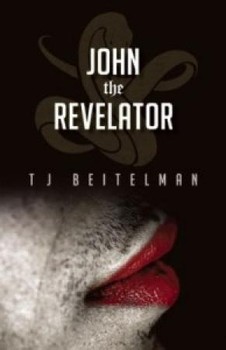
Though TJ Beitelman is a published author and poet he often refers to himself as “a frustrated visual artist.” As soon as you begin to read his latest novel John the Revelator you will understand why. The book is packed with rich images that captivate you, pull you into the story, and haunt you in your dreams. Black Lawrence Press, Beitelman’s publisher, describes the book this way:
Part reluctant Tiresias, part locusts-and-honey outcast, teenaged John stumbles into the darker thickets of human insight—the high arts of vice and violence—and the small Alabama town he calls home will never be the same when he comes out the other side.
Beitelman is a native of Virginia and though he has lived in Alabama for 18 years, he admits that it has taken a while for the state to feel like home. John the Revelator, oddly enough, has helped.
“For that novel in particular the sense of place is so important,” Beitelman says. “It was a way for me to connect with this place and to put my emotional truth squarely in this place.”
Each scene of the book plays out in your mind like a movie reel. So I wasn’t surprised to learn that Beitelman first wrote John the Revelator as a screenplay.
The idea for the novel was born of a short story titled “Tiresias the Seer” that was published in 2004 in the New Orleans Review. First, Beitelman tried to expand the short story into a novel, but with no luck. Then he got another idea.
“I’ve always wanted to write a screen play and I also subscribed to the theory Alfred Hitchcock once said that films are more like short stories,” Beitelman says. “So I figured maybe I will go back to the original short story and try to make that into a screenplay.”
Beitelman completed the screenplay but then considered the reality of both the film and publishing industries. He knew it would be much harder to produce a screenplay than it would be to get a book published.
“I thought this might be an outline for the novel,” he says. “So I went back through the screenplay and fleshed it out into a novel and it worked. I wouldn’t recommend that process. It took a long time and it was very frustrating and I probably wouldn’t do it again, but it worked.”
Along with its rich imagery, John the Revelator also has a distinct lyrical quality that you would expect from Beitelman considering he has an MFA in poetry from the University of Alabama.
“Things like how it looks on the page is important to me and white space is important to me,” he says.
Furthermore, Beitelman says he typically writes his narratives in pieces. The “frustrated visual artist” says he would even describe John the Revelator as a collage.
“There are different voices in the book,” Beitelman says, “So it’s a collage of voice as well as narrative and images.”
As a high school student in Springfield, Virginia, Beitelman took all the visual arts classes he could as they were the only creative outlet at his school. Though, he admits he wasn’t the greatest artist in the class, he appreciated that his teacher treated all the students like artists and took their work seriously.
“I still think of my teacher and the things he said about visual arts,” Beitelman says. “He always used to say that if you’re going to draw a crooked line on purpose, make sure it’s really crooked. Otherwise people are going to assume you were trying to draw a straight line and you couldn’t do it. It’s surprising how applicable that is to all forms of art.”

Beitelman teaches creative writing at the Alabama School of Fine – a public institution in Birmingham, Alabama for gifted junior high and high school students. I teach English at the school and, in the interest of full disclosure, I should tell you that Beitelman is one of my favorite colleagues.
Curious, I wanted to know how Beitelman found time to write while working such a demanding full-time job.
“Early on I felt like I had to have the Stephen King attitude towards it where you have to write a certain amount every day,” Beitelman admits. “I thought that was the only valid way to be a writer. I discovered I am the other kind of writer. There’s at least two. There’s that writer that sits down and invites the muse to come every day and it’s very compelling when you hear that, but I’ve been doing this for 20 years now and I have produced work and I am the type that writes in bursts. I need a burst to create raw material and then I tinker with it for a long time.”
For writers stressing about not writing daily, Beitelman says you should let yourself off the hook.
“I don’t worry myself over when I’m not writing anymore because I feel like the stuff that happens when I’m at the keyboard is only 10 percent of it,” he says. “Ninety percent is feeding the process.”
Beitelman says he feeds his writing process through reading and traveling and even doing things as simple as taking walks.
“Mostly it’s something more nebulous and vague than that,” Beitelman adds. “It’s a mindset of not turning off the impulse to the create something. I filter everything through that creative impulse. So there’s a permeable wall between the real world and the art you make from it.”
Javacia Harris Bowser is founding editor of See Jane Write Magazine.
For our Man of the Hour feature we take down the “No Boys Allowed” sign and share stories of men who are doing great things in the writing world. Send your nominations for Man of the Hourto seejanewritemag@gmail.com.
]]>By Chanda Temple
New York Times best-selling author Omar Tyree, who’s 44 and has been writing books for the last 21 years, recently visited Birmingham, Ala. to make public appearances and promote his latest book The Traveler, a fictional story about an American’s visit to Dubai. Several of his past fictional books have focused on relationships.
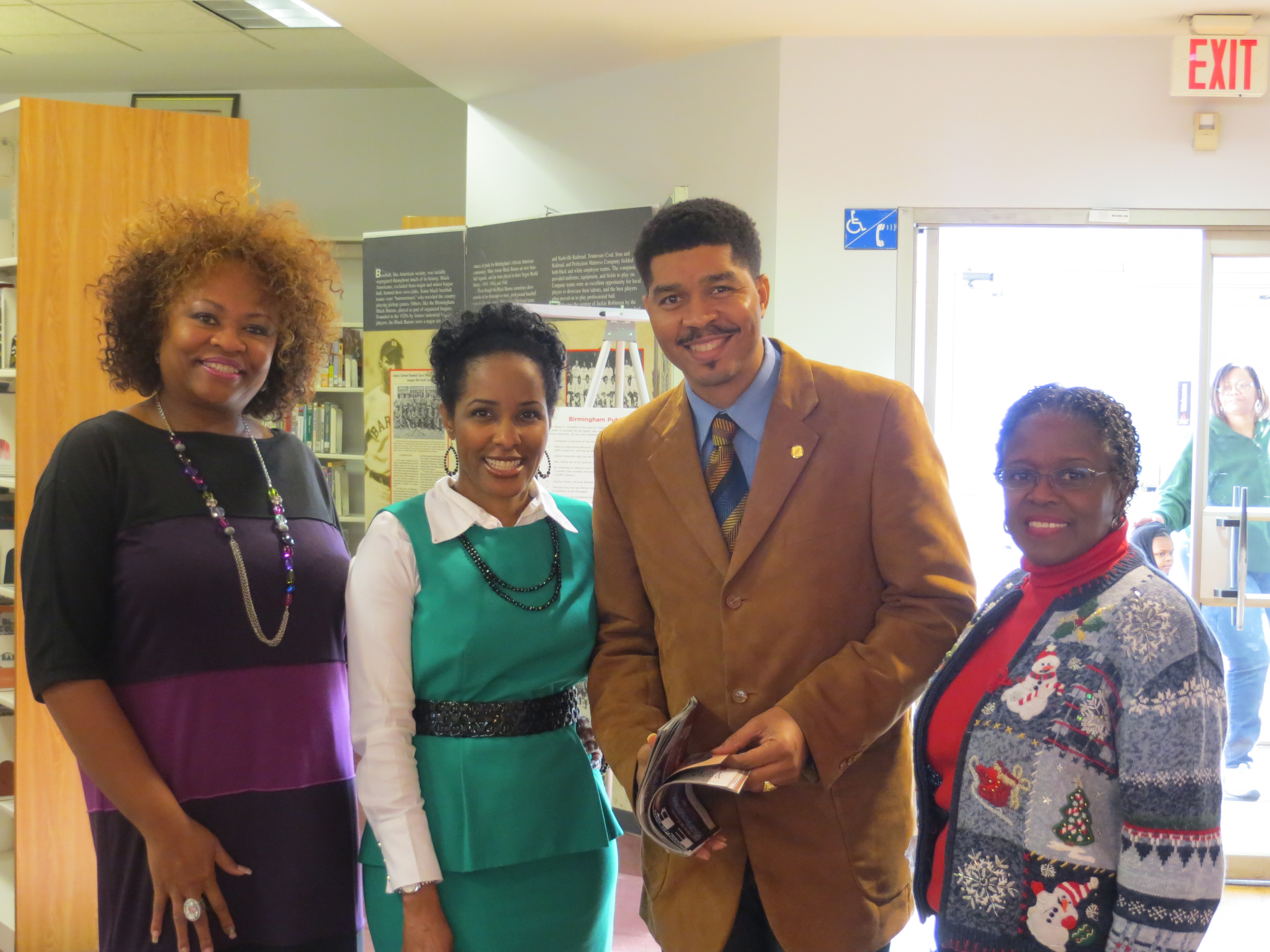
During his visit, the Philadelphia native stopped at the Smithfield Library to meet fans and give a lecture on his writing journey. Afterward, I asked him to provide a few writing tips for the new year. When the conversation was over, his frank answers left me ready to dive, head first, into writing the first chapter of a novel. I hope his tips will motivate you in 2014.
Writers write. You’ve been wanting to write a book but you haven’t because you are trying to “figure it out.’‘ Stop procrastinating and start writing. Just write down what you are thinking. You can revise it later.
Finish what you start. Once you start writing, don’t let getting stuck on Chapter 3 stop you. Remember that writer’s block is only fear of what you are trying to write. Just put it out there. You have to have confidence and faith in your own words.
Think about subjects that will be meaningful for your readers. There are too many topics that you know people will already read or like. However, consider writing about something that’s out the box, a subject that will make people say, “Oh! Wow!’’ Challenge yourself and challenged your readers.
Keep going. Don’t stop at writing one, two or three books. If you want to be a writer, keep it going. “I’m up to book Number 27, 28, 29, 30. And I’ve still got a whole lot left in me and a whole lot of different ideas I can write about,’’ Tyree says.
Tyree’s tips and the library lecture were so good, I couldn’t let the conversation just end there. So I asked him a few more questions to help writers.
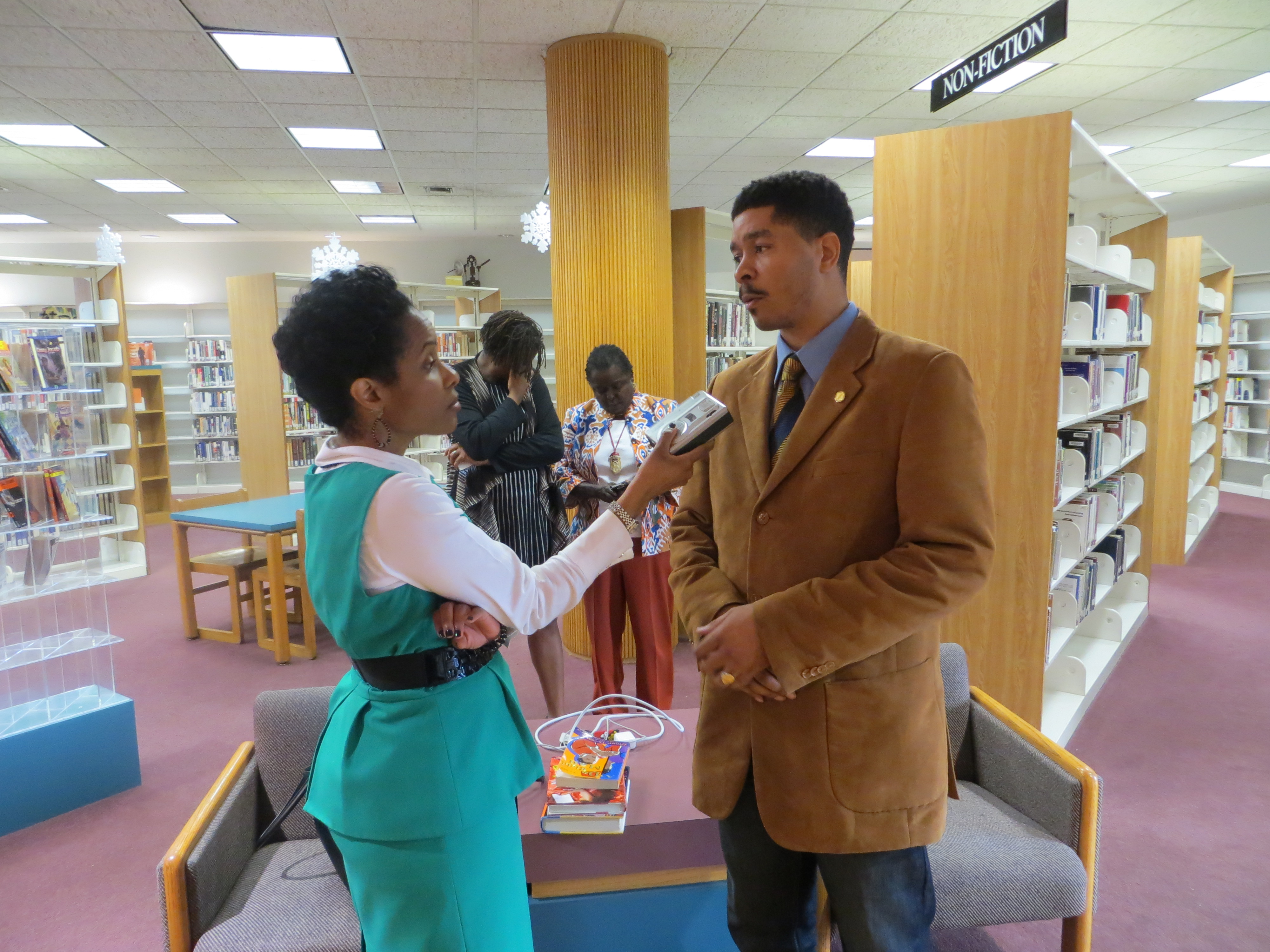
You talked about growing up in Philadelphia and overhearing teenage girls give detailed information about their love lives as you all rode buses to school. Such colorful details can give a writer something to draw from during the writing process. But what do you do if you have plain thoughts, lead a plain life and you don’t think your stories will move readers?
“You write plain thoughts,’’ Tyree says. “To say that plain thoughts can’t move, is wrong. You have other people who are in plain places as well and they’ll connect to those same things. They will be able to relate to that. You still have to write it down and you have to put it out there anyway because you have to see if people will be able to enjoy it. And you’ll surprise yourself.’’
“And that (surprise) will give you confidence to write the next one,’’ he says. “I hear what you are saying, but write it first and let’s see where it goes first. You can’t make that assumption before you do it.’’
What should an author do when his or her book is not moving and selling? Are they a failure? Should they just move on and keep writing?
“When I was first coming through, they said the third book was the charm. You’ve got to keep writing. The first book — (readers) may not like that one. It may be too hard,’’ he says.
“John Grisham’s A Time to Kill dealt with a very racially-charged issue. A lot of people didn’t read that book. The Firm was his third book — that took off. Then he came back to what was his favorite, A Time to Kill. So yeah, keep doing what you are doing. Sometimes, the audience will come around. Sometimes, you will come around to figure out how to do it better.”
(Side note: When Tyree released his third book, Flyy Girl, in 1993, readers snapped up the coming-of-age story about a young woman in the late 1980s. Hollywood is now looking at turning the book into a movie. He received the 2001 NAACP Image Award for Outstanding Literature in Fiction and a 2006 Phillis Wheatley Literary Award for Body of Work in Fiction.)
How do you decide if you should write fiction or nonfiction?
“It’s easier to write fiction than nonfiction. With nonfiction, there’s more research involved and checking the facts,’’ he says. He adds that although you still have to check facts for fictional stories, fiction offers more freedom. You can create what you want to create and go on your own story with fiction.
For more information about Tyree, who lives in Charlotte, N.C., visit www.omartyree.com. He says he offers consultations and does speaking engagements on a variety of topics. Follow him on Twitter at @omartyree.
Chanda Temple is director of public relations for the Birmingham Public Library. Before joining the library in 2012, she worked as a reporter for 19 years. Her last reporting job was as a features reporter at The Birmingham News in Birmingham, Ala., where she covered everything from cops and courts to fashion and elections. She’s received several awards for her stories and enjoys coaching students and adults on their writing, social media and networking skills. Follow her on Twitter @chandatemple.

Three years ago when Keith Lee was in his last year of law school the job market was bleak for young lawyers. Lee knew he needed to do something to make himself stand out. So he started a blog.
Lee’s blog Associate’s Mind soon became one of the most popular law blogs around and eventually landed him a book deal with the American Bar Association.
Lee’s first book, The Marble and the Sculptor, was released last week and is shaping up to be the fastest selling book the ABA has published.
Despite the success of his blog and debut book, Lee says, “I still have trouble thinking of myself as a writer.”
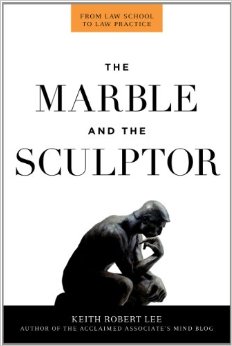
The Marble and the Sculptor is intended to be a manual for young lawyers but has life advice that could be useful to anyone in any career. The book’s title is from a quote by the controversial Nobel Prize-winning surgeon and biologist Alexis Carrel: “Man cannot remake himself without suffering, for he is both the marble and the sculptor.”
And this title speaks to the essence of the book: self-transformation. Lee, who works at Hamer Law Group in Birmingham, Ala., told The Birmingham News: “That quote describes the transitions I made in life to grow. It’s not so much adding to my life, it’s what I’m cutting away from it that matters.”
Just as Lee’s book can be useful to people who aren’t lawyers, his blogging journey has lessons for bloggers of any niche.
While working on his book, Lee continued to blog regularly, practice law, spend time with his wife and son, and attend networking events around Birmingham.
“Sleep is for the weak,” Lee says with a laugh, adding that he doesn’t watch much TV. He does, however, make time to exercise regularly as it gives him the energy he needs to be efficient and productive.
Though Lee still struggles to see himself as a writer, he’s accomplished what many writers dream of doing: landing book deals through their blogs.
When the ABA conducted a survey asking their young lawyers division where they turn for industry news, Lee’s Associate’s Mind blog was one of the top three websites these young attorneys listed. And so when the ABA wanted to publish a book for emerging lawyers, they knew Lee was just the person they needed.
Lee says he built his following largely through online networking. He stresses the importance of commenting on other blogs. Find other bloggers in your niche and become a part of their communities, he says.
Instead of depending on social media, Lee says, “Email is king.” When he was growing his blog Lee would often share, via email, interesting and important information with popular law bloggers. To show appreciation, those bloggers would then mention Lee in the posts related to the information he passed along. And after Lee built relationships with these established bloggers they were also willing to promote Lee’s site more directly.
This type of marketing takes time, Lee says, but it works.
“It’s about providing value to other people,” he says.
Keith Lee’s book launch party for The Marble and The Sculptor will be held Nov. 14 starting at 5:30 p.m. at Aloft Hotel, 1903 29th Ave S. in Homewood. The event is free and open to the public.
]]>
Author Christopher Paul Curtis feels comfortable in a library.
It’s where he’s written many of his books, including his first one, The Watsons Go to Birmingham – 1963, which has won numerous awards.
On Tuesday, Oct. 8, he will visit the Birmingham Public Library. But it won’t be to work on his next novel. It will be to sign copies of The Watsons Go to Birmingham – 1963 from 3 to 5 p.m. in the second floor Story Castle. He’ll also answer questions. The event is made possible by Alabama Public Television.
Curtis, 60, took off a year from unloading trucks in a Michigan warehouse in 1993 to write the fictional book, which looks at a family’s trip from Flint, Mich. to Birmingham at the height of the civil rights movement. The Sept. 15, 1963 bombing of Birmingham’s Sixteenth Street Baptist Church is featured in the book.
Originally, he had written that the Watsons took a trip to Florida. But when they got to Florida, nothing happened. He knew there had to be more to the story. He later discovered Detroit poet Dudley Randall’s “The Ballad of Birmingham,’’ a poem about the church bombing. Once Curtis saw the poem, he knew Birmingham was where the Watsons needed to go.
“I’m glad I did,’’ he says. “If I let them go to Florida, I can guarantee you wouldn’t be talking to me right now. I would be unloading trucks in a warehouse.’’
A year after writing the book, he returned to working in the warehouse in 1995 and submitted his book to two publishers. The first publisher rejected it, telling him that while she felt the characters were funny and well-developed, she didn’t feel that the story would resonate with young readers. The second publisher, Random House, accepted it.
Rejection from the first publisher showed Curtis that that was just one person’s opinion and he couldn’t let it defeat him. Today, he’s written seven books, his eighth book will be out next fall, he makes public appearances across the country, and has seen The Watsons made into a television movie, which aired in September on the Hallmak Channel. DVDs of the movie are now sold in Walmart. Teachers across the nation have made it required reading for years. More than 2,000 fourth graders in Birmingham City Schools are currently reading the book as part of a partnership between the City of Birmingham, the Birmingham Public Library and the schools. Curtis has sold 2.6 million copies of The Watsons since 1995. He stopped unloading trucks years ago.
“If I see her (the first publisher), I’m going to go ‘Nanh nah naahh nah,’ ’’ says Curtis, who is married with children and lives in Detroit.
Here, he offers his views on the book and writing:
Where he got his characters:
All the characters are composites. They are a little bit of Curtis, his brother, his sisters and some of parents. A lot of the things in the book happened to Curtis or to friends.
Why he uses his whole name as an author:
When he started writing, he did research to see if anyone else had his name. A man named Christopher Curtis had written the 1979 book “Be Your Own Chimney Sweep.’’ He added Paul to separate himself from the other Curtis.
Why he never takes writing for granted:
He worked in a car factory for 13 years in Flint, Mich. and worked four or five years hauling garbage, mowing lawns, being a maintenance worker and working on a senator’s campaign. “I know what real work is and I know how lucky I am,’’ he says.
His three tips for writers:
Be persistent, be dedicated and have fun writing.
How to handle self-doubt, especially in writing:
Self-doubt is always going to be there, but it’s a good thing. It keeps you on your toes. Through time and experience, you learn what’s good and what isn’t.
Why he went to the library every day to write:
He didn’t like writing at home or a coffee shop. He preferred the library, where he wrote his first book in longhand. His son would type it for him. He didn’t look at his year off to write as a vacation. He looked at it as a job. He was at the library, rain or shine, writing.
Has anyone asked him to do a Part 2 to The Watsons?
“I don’t’ think I would,” he says. “The Watsons have been through enough. I’m going to leave them alone.”
For our Man of the Hour feature we take down the “No Boys Allowed” sign and share stories of men who are doing great things in the writing world. Send your nominations for Man of the Hour to seejanewritemag@gmail.com.
]]>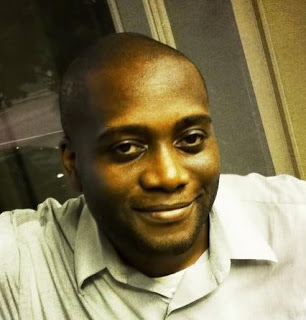
Andre Natta moved to Birmingham in 2004 to work for Main Street Birmingham, a predecessor of the economic development organization now known as REV Birmingham. A year later Natta started a personal blog he called Dre’s Ramblings, but soon realized that his blog wasn’t simply an online journal telling the stories of his life; it was telling the stories of Birmingham. Looking to sites like Gothamist in New York City, Gapers Block in Chicago, and Pegasus News in Dallas-Fort Worth, in 2007 Natta launched The Terminal, an online hub of information about the city of Birmingham.
Natta has garned a number of awards and opportunities thanks to his work with The Terminal. The site was the first non-mainstream media site to place for four consecutive years in the al.com/The Birmingham News’ readers’ poll Birmingham’s Best. The Terminal was also included in a list of 100 promising community news sites found by Michele McLellan during her fellowship of the Reynolds Journalism Institute.
“I’ve personally had opportunities to be a participant in the Reynolds Journalism Institute’s Hardly Strictly Young symposium, and present at the Online News Association conference when it was in Boston, and the first two years of the Block by Block Community News Summit in Chicago (attending all three years) in addition to conferences in Memphis and Chattanooga, Tenn.,” Natta says. “The fun part about presenting is the chance to learn from everyone else who’s in attendance.”
Natta’s work with The Terminal also led to The Digital City, a monthly column on technology in Birmingham that Natta has written for B-Metro Magazine since its launch in 2009.
In May of this year Natta started contributing to the Poynter Institute’s Regret the Error blog, which reports on media errors and corrections and accuracy and verification trends in journalism.
“Craig Silverman, the blog’s creator, has been focusing on his role as director of content at a startup called Spundge for more than a year now and was looking for someone to help hunt down the corrections and post to the blog,” explains Natta, who met Silverman at Hardly Strictly Young.
Silverman asked Natta to take on the job and Natta was more than happy to help.
“It’s been a beneficial learning experience for me,” Natta says. “I get to spend about two hours a day reviewing corrections and clarifications posted by news organizations across the country and around the world. It’s broadened what comes to mind when thinking about potential focus areas for the site. It’s also helped me improve my writing skills while getting critical feedback. I’m hopeful it will continue in some form and potentially lead to more writing opportunities.”
Natta recently relaunched The Terminal, making various changes to the site.
“The first significant change was to narrow the focus of the publication to be specifically about the city of Birmingham and its built environment,” Natta says. “It sounds limiting but it’s actually quite freeing and seeks to help visitors and readers understand why something is happening and how different things happening in different parts of the city affect each other. It also gives us a lens to look through when crafting pieces and projects for the site that makes it easier.”
The Terminal will also include more videos and written pieces will be longer. “I’ve realized I want to make sure we say what needs to be said instead of worrying about space limitations,” Natta says. “It is digital, after all.”
These days Natta also is busy working on a new project.
“I’m in the early stages of developing a project that would make the site more of a hub than ever before – one that serves not just The Terminal, but all of our local media outlets while serving as a resource for educational purposes,” Natta explains. He’s busy working on a site plan for 2014 and hopes to hire a sales associate soon. These efforts, Natta says, will help The Terminal “evolve into a different type of media organization – one more research driven than people believe possible.”
It’s about people, not pageviews
When Natta started The Terminal in 2006 he spread the word about his site in a number of ways.
“We leveraged word of mouth early on, using Myspace as a major communications tool,” Natta says. “There were also monthly mixers, partnerships with local cultural institutions, and a lot of sitting in coffee houses and bars just talking with people. Word of mouth was the most useful tool to grow The Terminal – that and an incredible group of contributors early on.”
Natta doesn’t deny that social media networks continue to be an effective way of reaching people, but he believes it’s important to step away from the computer too.
“At the end of the day, most of these social networks and websites are just digital spaces where we tend to act as we would offline,” he says. “We wanted to serve as a way people could connect on issues, regardless of opinion, and so I focused on figuring out how to connect with folks where they were most comfortable. I can’t measure the impact of a piece by pageviews alone; I’ve learned more about folks reading the site offline in conversation than I ever would just sitting behind a screen and not living a life.”
Natta offered advice for others hoping to launch sites like The Terminal in their towns.
“Look for those who don’t currently have a voice, or a specific void that needs to be filled,” Natta says. “You can’t be all things to all people, so I’d make sure you weren’t trying to overextend. You do want to test the limits of your comfort zone though, otherwise you won’t know what’s possible.”
Natta added that it’s also important to be willing to learning new things and open to criticism.
“I’d also reach out to those already operating sites, even if they’re in the same city,” Natta says. “Sometimes you’ll be surprised that all you needed to do was ask.”
Hi final piece of advice is simple, though something too many of us forget to do: “Most important,” he says, “have fun and be you doing it. If you can’t be you, what’s the point?”
]]>
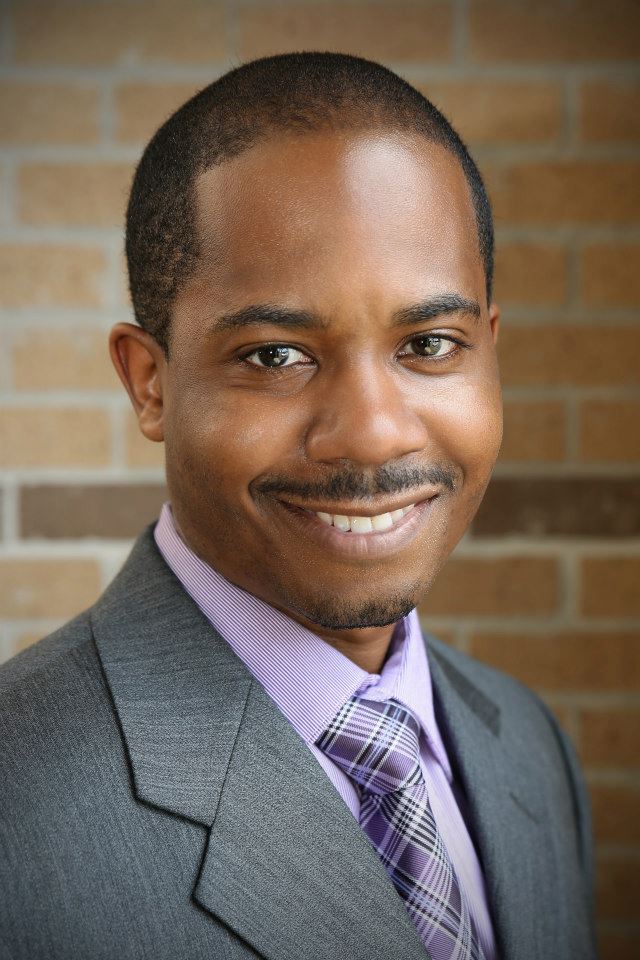
In the interest of full disclosure I should tell you that this week’s Man of the Hour, Edward Bowser, is my husband. He’s also the behind-the-scenes copy editor for See Jane Write Magazine and is paid only in hugs and kisses. But those things have nothing to do with why I’m featuring him on the website this week.
With nearly 10 years of experience in the newspaper industry, Edward (sorry I can’t refer to my husband by his last name) has plenty of wise words to offer on the world of journalism. He started his career as a copy editor at The Courier-Journal in Louisville, Ky. , where he worked for eight years. Edward then worked in advertising for a few years. It was during that time that he discovered the power of social media while serving as the agency’s community manager. Last year Edward returned to his first love – newspapers. Today Edward is a community engagement specialist for The Birmingham News and AL.com.
Edward will join other editors on Aug. 22 at our Meet the Press Media Mixer set to be held in Birmingham, Ala.
SJW Magazine: What exactly is a community engagement specialist?
Edward: My role of community engagement specialist can be broken down into three main components: 1) I’m a part of the Birmingham News’ editorial board, where I weigh in on key issues around our city and nation. I also focus a lot on issues that specifically affect the young professional community. 2) I help manage the AL.com’s social media channels, using Facebook, Twitter and Google Plus to share our writers’ stories and stimulate positive conversation. 3) I work as a community ambassador, organizing and attending that help bridge the gap between the newsroom and community.
It combines my three major passions – editorializing, social media and community service – into one role. I enjoy every minute of it.
What are the keys to writing good opinion pieces?
The No. 1 rule for writing a good op-ed is to have an informed opinion. Everyone has an opinion, but backing up your statements with hard facts and engaging writing will make an impression on readers. Your op-ed also needs to be clearly focused. Stick to one topic and ride it all the way through. Meandering muddles your point.
Do your research, stand firm on your position and write in a clear and engaging manner. Whether or not your readers agree with your position, those tips will help them broaden their thinking.
What advice would you give to someone who wants to write opinion pieces for an online publication but they’re afraid to receive negative comments?
When it comes to opinion writing, negative comments come with the territory. And in this era of online anonymity, that has only increased. But if you’re truly passionate about your topic, you can’t let naysayers rattle you.
As I mentioned earlier, it’s important that you do your research and support your line of thinking with solid facts. That way, when the haters come a-calling (and they will), you’ll have a solid foundation to stand on. When critics attempt to pick apart my work in the comments section, I literally copy and paste paragraphs from my own column to refute their claims. They almost always back down (likely because they didn’t even finish reading the column before they started complaining). Believe in what you write and stand by it.
Remember, you don’t write op-eds to get cheers. You write them to offer a fresh perspective on an important topic.
What is your response to people who think journalism and newspapers are dying?
Journalism was born from the human desire to know more about the world around us. That curiosity and thirst for knowledge will never die. However, technology is evolving at a rapid pace and the world of media is rapidly attempting to catch up. Sure, the way we consume media is changing, and along with that change, we’ll stumble a bit to find our footing. But as long as we’re guided by the basic principles of journalism – accuracy, the pursuit of truth, and serving as a moral compass – good journalism will survive no matter what device delivers our news.
Birmingham-area readers, you can meet Edward Bowser and other editors of Birmingham-based publications at the See Jane Write Meet the Press Media Mixer presented by Hamer Law Group. This is an invitation-only event. Invitations will be extended to See Jane Write members and sponsors. For more information email seejanewritemag@gmail.com.
]]>
Photo Credit: Sean Kelley
The Deep South may be the last place you’d expect to find some of the nation’s greatest social media gurus. But Wade Kwon is determined to change that.
Kwon is a well-known blogger, journalist, and communications consultant based in Birmingham, Ala., and is the director of the upcoming blogging and social media conference Y’all Connect.
Y’all Connect is all about digital and corporate storytelling and will be held July 23 in Birmingham.
“Birmingham is too talented and too rich of an environment to keep quiet any longer,” Kwon says.
The conference will feature speakers like Mack Collier, an Alabama-based social media strategist, trainer and speaker and author of the book Think Like a Rock Star: How to Create Social Media and Marketing Strategies That Turn Customers Into Fans. Collier will help business owners figure out how they can use blogging and social media to tell the stories of their companies and teach bloggers how they can build a strong fan base and vibrant community around their work.
Meteorologist and Twitter superstar James Spann of Birmingham’s ABC 33/40 will also be speaking on how to tell your story across multiple platforms and to wide demographics.
The conference will be flying in some speakers, too, including Erika Napoletano of Redhead Writing, who will be speaking on the power of storytelling and giving tips to entrepreneurs who feel their businesses are stuck in a rut.
You can view the complete conference schedule here.
Though the focus of Y’all Connect is corporate storytelling, a new mode of reaching potential customers through blogging and social media, Kwon stresses that Y’all Connect will be beneficial to bloggers and writers too, especially those looking to help businesses with their online presence.
“Someone has to do the storytelling,” Kwon says. “Bloggers and writers are best equipped to tell the story in digital form, whether through prose, photos, videos or other clever means. I believe the smart companies will hire more digital natives to help them reach their audiences.”
If anyone knows the power of social media, it’s Wade Kwon. The Poynter Institute selected him as one of 35 Influential People in Social Media. And in 2011, Kwon co-founded the Alabama Social Media Association, a nonprofit organization dedicated to educating people in social media. He currently serves as chair for the board of directors.
But why has social media become such a powerful tool in the world of business?
The answer is simple, Kwon says: “It’s free, That is a price tag that is hard to beat, especially when considering how much other forms of marketing could and do cost.”
Y’all Connect blogging and social media conference is set for Tuesday, July 23 and will be held at the Birmingham-Jefferson Convention Complex in downtown Birmingham, Ala. Tickets for “Y’all Connect” can be bought on the website for $129. The price covers a full day of seminars, food, access to the pre- and post-parties. See Jane Write Magazine readers can receive a $30 discount by using the code SJW89.
]]>
You’ve probably heard of a girl crush – platonic feelings of awe and admiration that one woman has for another. Well, a friend of mine frequently uses another term worthy of placement in the Urban Dictionary – “pro crush.” A pro crush is defined by platonic feelings of awe and admiration for someone in your profession, feelings that go beyond simple respect and make you a bit giddy.
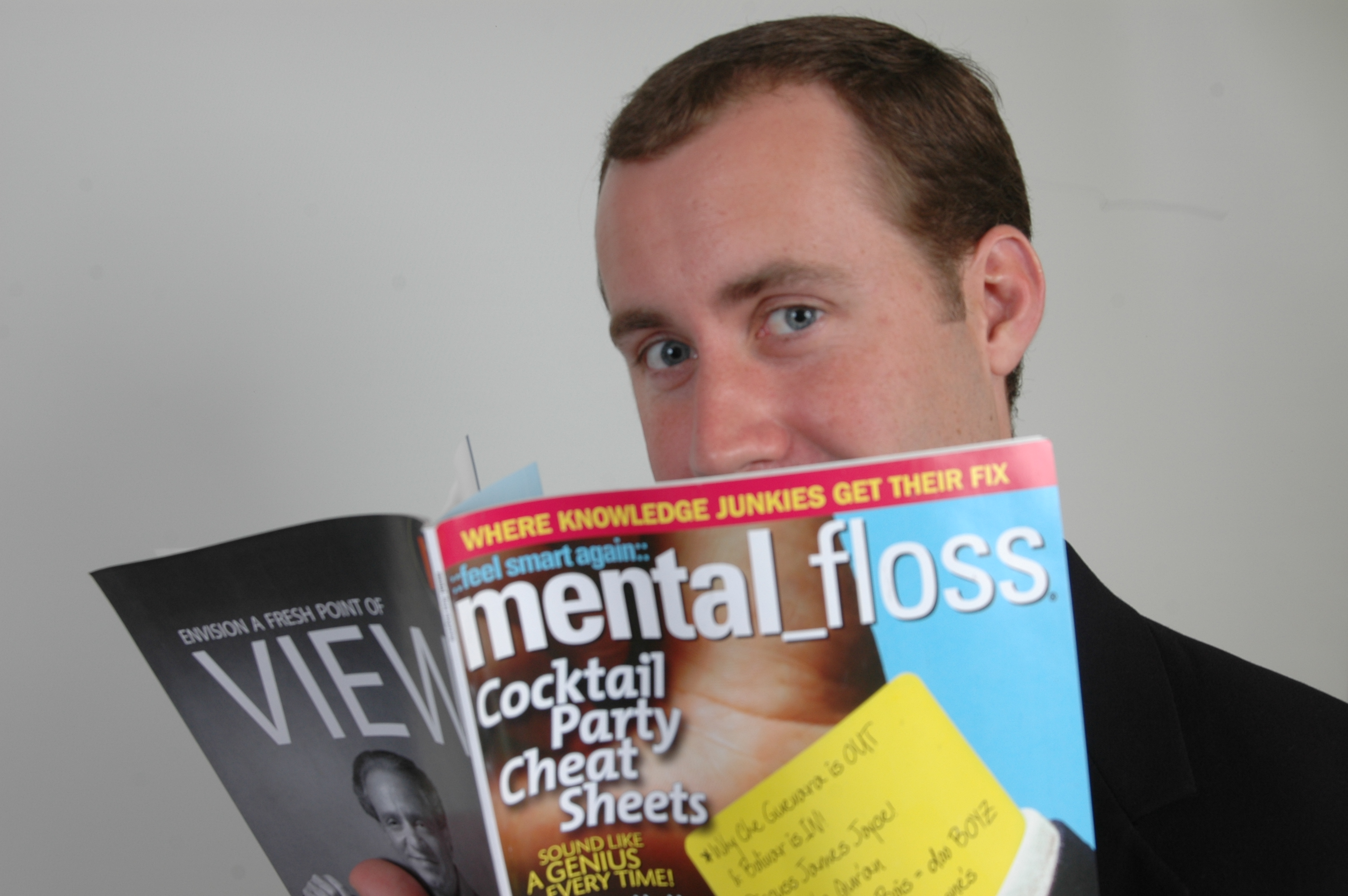
Meet my pro crush – Will Pearson, co-founder of Mental Floss magazine, which has been described as a complete liberal arts education delivered in bi-monthly installments.
While I spent my college years dreaming of one day launching a magazine, Pearson was busy actually starting one. In 2001 Pearson and his friend and business partner Mangesh Hattikudur started the magazine while they were students at Duke University; it began as a free campus publication.
“They were disappearing from the racks,” Pearson says, which told him that the magazine was well received. “Either that or some jerk was taking and burning them all,” Pearson says.
The magazine soon became a national publication and today Mental Floss, which has offices in Birmingham and New York, boasts a circulation of 150,000.
Pearson is a native of my hometown of Birmingham, Ala. When I found myself sitting next to him at a meeting for people involved in the local literary and media scenes I was so excited you would have thought I was backstage at a Beyonce concert. I played it cool, though. Maybe.
We exchanged contact information and a few weeks later I was having coffee with my pro crush, chatting with him about how he managed to become the founder of a successful magazine before he could even call himself a college graduate.
“Had we not come up with the idea when we were in college Mental Floss may have never happened,” Pearson says.
At that time in their lives, he says, their attitude was “What is there to lose?” They had no mortgages, no families to worry about.
“And we didn’t know the rules,” Pearson says. They didn’t know what one should or should not do when launching a magazine. They simply set out to create the type of magazine they wanted to read. And it worked.
“We weren’t afraid to start with something that wasn’t polished,” Pearson says.
With features on arts and literature to feed your right brain, features on science and technology to indulge your left brain, stories covering world culture, and trivia galore, the folks at Mental Floss describe the magazine this way:
mental_floss magazine is an intelligent read, but not too intelligent. We’re the sort of intelligent that you hang out with for a while, enjoy our company, laugh a little, smile a lot and then we part ways. Great times. And you only realize how much you learned from us after a little while. Like a couple days later when you’re impressing your friends with all these intriguing facts and things you picked up from us, and they ask you how you know so much, and you think back on that great afternoon you spent with us and you smile.
And then you lie and say you read a lot.
In the spring of 2011 Pearson and Hattikudur sold Mental Floss to Felix Dennis of Dennis Publishing. Pearson says the decision to sell a business is always a difficult one for any entrepreneur to make. Mental Floss was profitable and growing and thus there was no dire need to sell the magazine.
“You never know if selling a company is the right thing to do until you’ve done it,” Pearson says.
But he believes the choice they made was the right one. Dennis was adamant about not changing the feel of Mental Floss and Pearson says, “It still feels like it’s very much our baby.”
Hattikudur still serves as editor-in-chief and Pearson is president of Mental Floss, Inc.
Today Mental Floss is much more than a magazine, now producing books, trivia games, t-shirts and a website that’s updated several times a day.
Before Pearson and I finished our scones and headed back out into the Alabama heat, I asked what advice he’d give folks hoping to follow in his footsteps. His answer was simple: wake up every day and do at least one thing to advance your business.
For our Man of the Hour feature we take down the “No Boys Allowed” sign and share stories of men who are doing great things in the writing world. Send your nominations for Man of the Hour to seejanewritemag@gmail.com.
]]>